
Get Accurate Pebble Stone Flooring Installation Cost Estimates in Johannesburg, Roodepoort, Sandton, Randburg, Eastrand, Midrand, Centurion & Pretoria
Pebble Stone Flooring Installation Cost is a key consideration when we install and maintain attractive, durable surfaces across Gauteng, from Pretoria and Centurion to Johannesburg, Midrand and Sandton. Our aim is to give clear advice so you can plan with confidence.

We use UV-rated epoxy and high-quality materials so the finish stays fresh under the Gauteng sun. The system suits bathrooms, patios, pool surrounds and busy living areas, and it works over concrete, brick and tiles when prepared properly.
We explain what drives prices and provide transparent quotes. Typical residential ranges and resealing intervals are part of our guidance, so you understand long-term value and upkeep.
Expect friendly on-site assessments, clear services and fair rates across all suburbs. We help you choose colours and finishes to match your style while keeping safety and slip resistance front of mind – Contact Us
Pebble stone flooring options for Gauteng homes and businesses – Pebble Stone Flooring Installation Cost
We offer finishes that pair natural texture with modern resin systems to suit homes and busy commercial spaces. Our choices balance grip, appearance and longevity for local conditions.

Natural river rock and round finishes
Natural river rock gives an organic, calming look and a warm underfoot feel. Polished imported stones create a high-end aesthetic for premium projects.
Epoxy resin-bound systems
Epoxy resin-bound surfaces are seamless, porous and slip-resistant. They work well in wet areas such as showers, pool surrounds and busy commercial zones.
Decorative colourways and sub-bases
We create black, white and mixed patterns that suit your décor. Systems bond to concrete, tiles, brick and pavers; they do not suit timber or asphalt for long-term durability.
“Choosing the right mix of materials and resin keeps colour stable and performance high in Gauteng’s sun.”
- We advise on pebble size and mix to change texture and visual flow.
- We specify UV-rated epoxy for outdoor areas to prevent fading.
- We prepare existing tiles and concrete to ensure strong adhesion.
| Type | Look & Feel | Best Use |
|---|---|---|
| Natural river rock | Organic, tactile | Bathrooms, entries, feature floors |
| Epoxy resin-bound | Seamless, slip-resistant | Wet areas, commercial floors, pools |
| Decorative mixed | Branded patterns, bold contrasts | Retail, lobbies, patios |
Pebble Stone Flooring Installation Cost in Gauteng: per square metre pricing and examples
We give clear per square metre ranges so you can budget before a site visit. Most residential projects fall between R450–R850 per square metre. Commercial rates are higher, typically R650–R1,200 per square metre because of heavier-duty resin and higher performance specs.
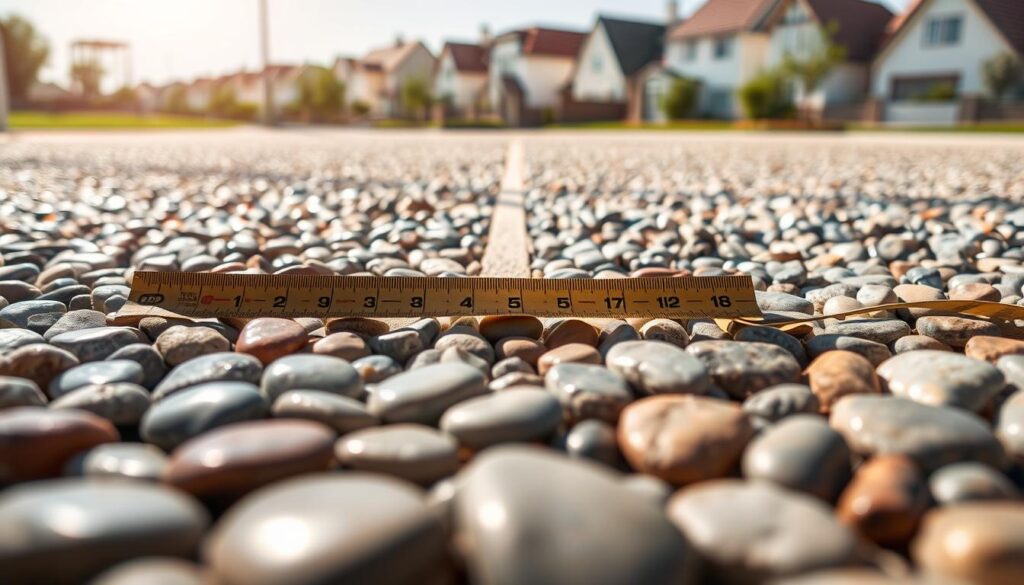
Residential vs commercial prices
Indoor living areas usually sit at R550–R850 per m². Bathrooms (6–8 m²) often total R3,500–R6,000, while showers (1.5–2 m²) range R2,200–R3,800. We factor in labour and materials to show realistic totals.
Room and area examples
- Entries (4–6 m²): R2,800–R4,500.
- Patios (20–30 m²): R10,000–R22,000.
- Walkways: R500–R750 per square metre; pool surrounds: R650–R950 per square metre.
- Garages: single (15–20 m²) R9,000–R15,000; double (30–40 m²) R16,000–R28,000.
Indoor vs outdoor considerations
Outdoor areas need UV-rated epoxy to keep colours stable and porous finishes for drainage. Prep repairs add R80–R150 per square metre when tiles or concrete need levelling or deep cleaning.
“We share honest ranges so you can align scope with spend before asking for quotes.”
| Application | Materials per m² | Labour per m² |
|---|---|---|
| Bathrooms | R220–R420 | R230–R430 |
| Patios | R300–R520 | R350–R680 |
| Garage floors | R350–R600 | R400–R800 |
What drives your total cost: materials, metres and workmanship – Pebble Stone Flooring Installation Cost
We outline the main elements that shape any quote so you can plan clearly.

Pebble selection and resin system quality
Premium polished aggregates and special colours raise the materials price. The resin grade and UV stability also matter.
Square metreage and layout complexity
Larger areas usually bring lower per-metre rates, while irregular shapes, drains and trims increase labour and time.
Surface preparation and substrate repairs
Surface preparation is crucial. Levelling, crack filling or deep cleaning can add R80–R150 per m².
Labour, techniques and why DIY can cost more
Our teams control epoxy mixes, curing and slopes. Poor DIY mixing or prep often causes loose pebbles, drainage faults and early repairs.
Regional pricing notes
Gauteng is our base. Allow for surcharges: Western Cape +10% (R500–R800), KwaZulu‑Natal +15% (R800–R1,200), Eastern Cape +20% (R1,000–R1,500).
| Factor | Typical impact | Range |
|---|---|---|
| Materials & resin | Higher quality raises lifespan | Standard → Premium |
| Preparation | Prevents failures; adds labour | R80–R150 per m² |
| Layout complexity | More cutting and detail work | Increases labour hours |
“Good preparation and skilled labour save replacement expense over time.”
Budget planning, maintenance and long-term value – Pebble Stone Flooring Installation Cost
A simple reseal schedule makes budgeting for ongoing services straightforward and predictable. We show how modest, regular spend keeps the surface protected and extends life across busy living areas.
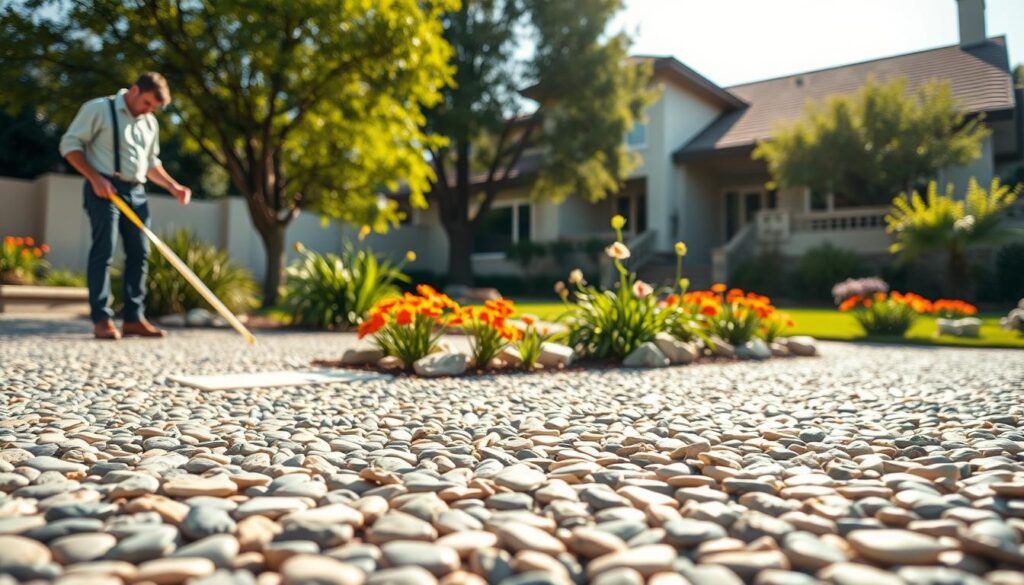
Resealing intervals and costs per square metre at present rates
We recommend a professional reseal roughly every two years. Current rates sit at about R45–R85 per square metre. This small outlay preserves colour, grip and long-term durability.
Example: a 20 m² patio reseal typically runs R900–R1,700. Such periodic care avoids larger installation cost later by preventing deeper repairs.
Low-maintenance routines
Daily upkeep is simple. Sweep or vacuum grit, rinse with water and use mild soap for stubborn marks. Indoor areas need less frequent attention than outdoor zones.
For outdoors, an occasional low-pressure wash lifts trapped dirt. Minor chips and loose pebbles are repaired with epoxy touch-ups to match the surrounding surface.
| Task | Frequency | Indicative price per square metre |
|---|---|---|
| Sweep / vacuum | Weekly | Free |
| Gentle wash with soap | Monthly | Included in routine |
| Professional reseal | Every 24 months | R45–R85 per square metre |
| Pressure wash (outdoor) | Annually | R10–R25 per square metre |
“Small reseals and simple care deliver better value than frequent replacement.”
We are available to quote resealing or minor repairs so your floors stay consistent across connected areas. Good preparation and the right epoxy materials reduce total running prices over time.
Pebble Stone Flooring Installation Cost: Conclusion
We close with clear budgeting guidance so you can move from idea to quote with confidence.
In Gauteng we show typical ranges: R450–R850 per square metre for residential jobs and R650–R1,200 per square metre for commercial projects. These figures help you compare materials, labour and area quickly.
Prepare for substrate work if needed — surface preparation often adds R80–R150 per m². Routine care is simple: a professional reseal every two years at about R45–R85 per square metre keeps the surface durable. Systems bond well to concrete, tiles, brick and paving, and UV-stable epoxy suits outdoor areas.
We keep pricing transparent and can supply summary tables, materials vs labour splits and tailored quotes on request. Get in touch and we’ll help you select the best option for your living or commercial area.
FAQ – Pebble Stone Flooring Installation Cost
What areas in Gauteng do we cover for pebble stone flooring installation?
We work across Gauteng, including Johannesburg, Pretoria (Tshwane), Sandton, Roodepoort, Soweto and surrounding suburbs. Our teams handle both urban and township projects, so we can provide quotes for inner-city apartments, suburban homes and commercial premises.
Which surface types are suitable for this surfacing system?
We can apply finishes over prepared concrete, existing ceramic tiles, paving and compacted screed. Each base needs correct levelling and crack repair to ensure a long-lasting finish. For timber or suspended floors we assess the structure and recommend appropriate overlays or alternatives.
How do natural river rock finishes differ from epoxy-bound systems?
Natural rounded finishes give a textured, tactile feel ideal for feature areas and wet zones. Epoxy-bound systems create a smoother, seamless surface that is easier to clean and better for heavy foot traffic. We guide you to the right system depending on use, visual goals and maintenance expectations.
What price range should we expect per square metre in Gauteng?
Prices vary with material quality, resin grade and site preparation. As a guide, basic domestic projects start at lower rates while premium coloured mixes, complex layouts or commercial specifications increase the per-metre rate. We supply tailored quotes after a site visit so you know the exact budget.
Do indoor and outdoor applications have different requirements?
Yes. Outdoor areas need UV-stable resins, enhanced drainage and anti-slip finishes. Indoor work prioritises seamless joins, ease of cleaning and compatible sealers for wet rooms. We specify different products and techniques to suit each environment.
How much of the total price is materials versus labour?
Material and labour splits depend on the project. For many jobs, materials (resin, aggregate, primers) can make up a substantial portion, but skilled labour for surface preparation and finishing is a major cost driver. We provide a transparent breakdown in every quote so you see where money is spent.
Can we install decorative colourways and custom patterns?
Absolutely. We offer black, white and mixed-profile colourways plus bespoke designs for feature zones. Complex patterns require extra preparation and time, which we factor into the quote. Samples help you choose before we start.
What preparation does a surface need before application?
Surfaces must be clean, sound and correctly profiled. That can involve mechanical grinding, crack repairs, levelling screeds or primer application. Good preparation prevents future bonding and durability issues, so we rarely skip these essential steps.
How often will resealing or maintenance be needed?
Reseal intervals depend on traffic and exposure. Typical indoor areas may need resealing every few years; high-traffic or outdoor locations may need it sooner. Routine maintenance is light: sweeping, gentle washing and occasional pressure-washing outdoors keeps the surface looking good.
Is it worth choosing a professional over a DIY approach?
We recommend professionals. Correct resin mixing, aggregate grading and surface profiling make a huge difference to longevity and appearance. DIY mistakes often lead to higher repair costs over time, so professional workmanship is a better long-term investment.
Do we provide quotes and site consultations across Gauteng?
Yes. We offer on-site consultations and free preliminary quotes for most suburban locations. For commercial or complex jobs we provide detailed estimates, timelines and material samples so you can decide with confidence.

