
Transform Your Outdoor Space with Chemical Stump Treatment
Chemical Stump Treatment experts bring local knowledge to every job across Gauteng, covering cities and suburbs with a clear, practical approach. We explain the process from site checks to final control so you know the likely time and outcome.
We apply recognised methods immediately after cutting to stop resprouting, cutting close to the ground and leaving a short stump for safety. We tailor work around access, boundary walls, paving and underground services common in South African gardens.
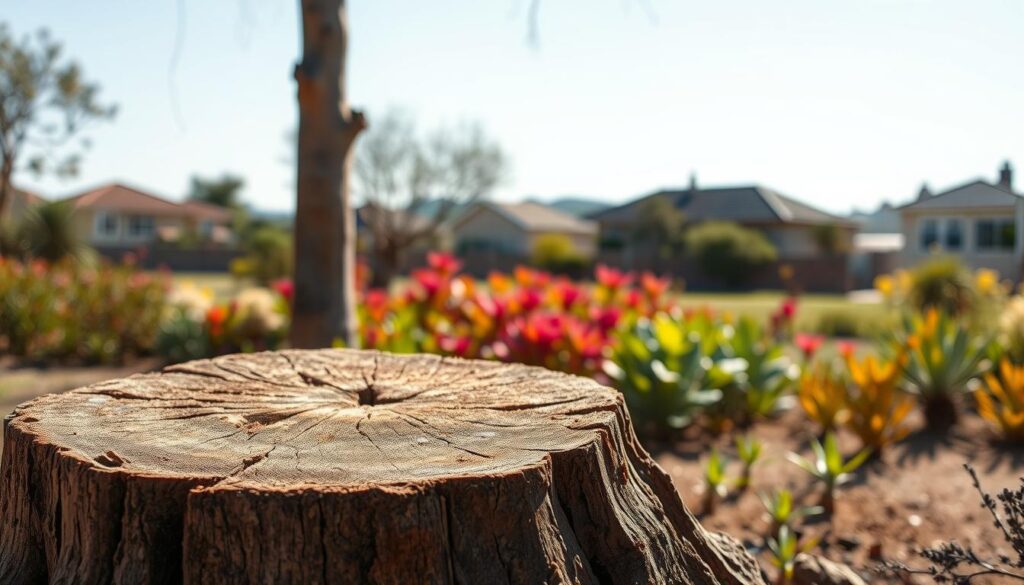
Safety is key: we use PPE, low-pressure application and actives suited for residential areas to protect nearby plants and soil. We add dye to see coverage and allow a rain-free window so the process works fast.
We give straightforward advice on drying time and what the treated stump will look like. We can show options and mix ratios in simple tables so you can compare at a glance – Contact Us
How we approach safe, effective stump control across Gauteng – Chemical Stump Treatment
Our approach combines practical site checks with selective work to keep gardens tidy and safe. We aim to stop regrowth while protecting nearby paving, irrigation and plants. The process is straightforward and matched to each site.
Why this matters for safety, appearance and regrowth
We remove hazards such as trip risks and mower damage by targeting living tissue to halt resprouting. Untreated stumps often sprout vigorously and make maintenance harder.
Local considerations in cities and suburbs: soil, moisture and access
Across Gauteng we adapt to clay-heavy patches, irrigated lawns and shaded beds. That helps us choose a way that limits harm to surrounding plants and roots.
- We pick a selective method that treats only the intended surface and sapwood ring immediately after cutting.
- We plan work around tight driveways, walls and shared boundaries to protect paving and irrigation lines.
- We avoid early spring when strong sap flow can reduce success and waste effort.

| Soil type | Moisture | Access | Recommended way |
|---|---|---|---|
| Heavy clay | Low after dry spell | Tight yards | Selective cut-and-apply |
| Sandy/topsoil | Irrigated lawns | Open beds | Standard cut-and-apply |
| Shaded loam | High moisture | Shared boundaries | Careful placement, avoid drift |
We explain timelines and set clear expectations for how different tree and shrub species respond. That keeps the job tidy and the outcome realistic.
Planning, safety and timing for herbicide-based stump control – Chemical Stump Treatment
Good timing and the right gear make control work quick and tidy. We plan each job to reduce risk and to protect gardens, lawns and neighbouring beds.

Personal protective equipment
We insist on PPE: safety glasses and herbicide-resistant gloves at minimum. We advise against leather gloves or boots because they can absorb residues.
Best seasons and timing
We favour late summer to autumn months for reliable uptake. Avoid early spring sap flow; cutting then often reduces success.
Site checks near water, lawns and beds
We check proximity to water and irrigated lawns so we can choose products with aquatic labels where needed. We avoid soil‑active herbicides in residential areas to protect soil and nearby plants.
Tool & equipment checklist
| Item | Purpose | Key notes | On-site action |
|---|---|---|---|
| Chainsaw / brush saw | Cutting low and safe | Cut 1–2 inches high | Sharpened, fuel checked |
| Backpack/hand sprayer | Precise application | Low pressure, calibrated | Add visible dye, use within minutes |
| Herbicide-resistant gloves & glasses | PPE | Avoid leather | Worn for all handling |
| Wedges, absorbents, disposal bags | Site control & cleanup | Contain spills, follow label | Document and remove waste |
- We cut low and treat within minutes to aid translocation and cut regrowth chances.
- We keep a 4–6 hour rain-free window after application to avoid wash-off.
- We record time, weather, product and rate, and follow label disposal steps for empty containers.
Chemical Stump Treatment: step-by-step method we use
We follow a precise sequence so each cut and application gives the best chance of one pass success.
Cutting technique: We cut low, leaving about 1–2 inches to reduce trip hazards and make access easier. For stems under ~4 inches we treat the entire top so the whole sapwood is covered.
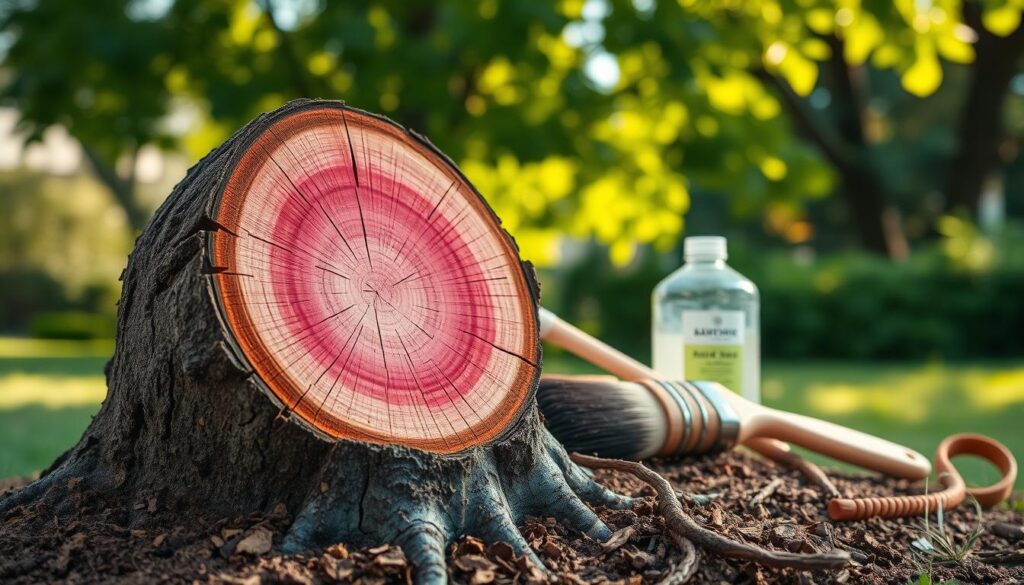
Immediate window: We apply herbicide within minutes of cutting to boost movement through the tree system and down to the roots. Low sprayer pressure and a visible dye keep the mix on target.
Focus area: Aim for the sapwood ring just inside the bark. Keep the top damp with solution but avoid puddling; a small amount goes a long way.
| Active | Typical mix | When to use |
|---|---|---|
| Glyphosate 41%+ | Mix 1:1 with water (50% v/v) | Immediate cut stump work on many species |
| Glyphosate 20% | Use undiluted where label allows | Ready‑to‑use products for quick jobs |
| Triclopyr amine 8% | Use undiluted | Good for broadleaf trees and shrubs |
| Triclopyr ester (oil) | As labelled; use for delayed application | When cutting-to-spray delay is unavoidable; spray top and sides |
Large vs multi‑stem: Treat each cut face thoroughly. For big stumps we work around the entire circumference. For multi‑stem shrubs we treat each stem to stop resprout.
We avoid soil‑active options near lawns and plan a 4–6 hour rain‑free window to improve success.
Alternative non-grinding methods: salts and hot water – Chemical Stump Treatment
For some sites, slower, salt- or heat-based methods give a tidy, low-impact way to break down a tree stump. These approaches are patient but effective when grinding is not possible.
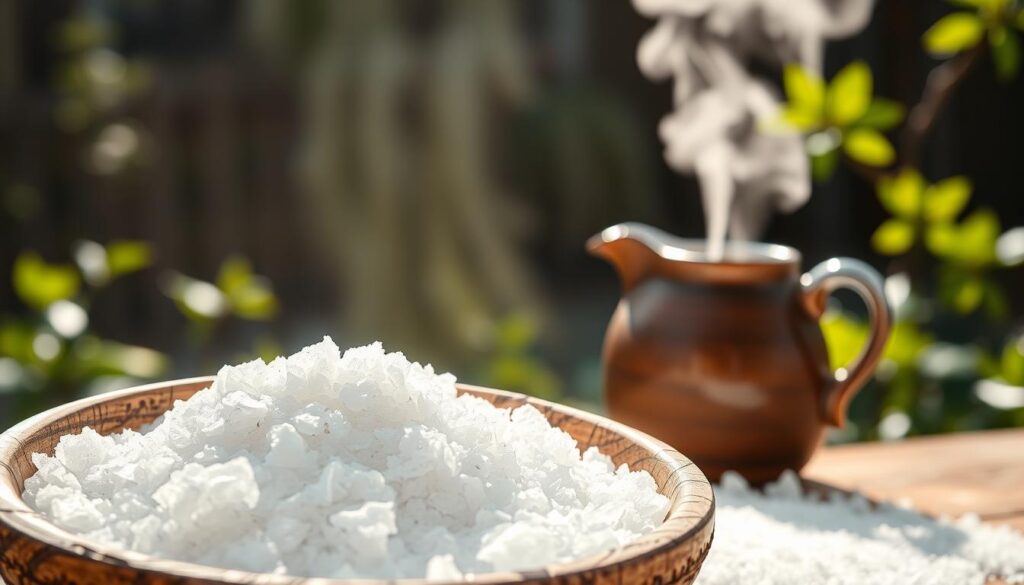
Epsom salt approach
What we do: Drill several holes about 10 inches deep around the top of the tree stump. We then fill hole after hole with epsom salt crystals, dampen slightly so the crystals settle, and cover to prevent wash‑out.
How often: We top up every 2–3 weeks and keep the area protected from heavy rain. Expect the wood to soften and rot over 6–12 months as fungi and moisture finish the process.
Rock salt method
We drill holes, add rock salt and then cover the top with soil or mulch to hold moisture over the ground. The sodium chloride draws moisture away and helps the core decay.
We monitor nearby beds and adjust placement to avoid salt leaching into plants you want to keep.
Boiling water technique
As a chemical-free option, we pour boiling water into pre-drilled holes and repeat the process. Repeated heat weakens fibres and eases later manual removal.
We always avoid burning, bleach and diesel because they harm soil life and are unsafe.
| Method | Supplies | Re-apply | Estimated months to result | Best for |
|---|---|---|---|---|
| Epsom salt | Drill, epsom salt, cover | Every 2–3 weeks | 6–12 months | Controlled, low-risk yards |
| Rock salt | Drill, rock salt, mulch/soil | Top up as needed | 4–10 months | Drying and gradual decay |
| Boiling water | Drill, kettle or pot, cover | Repeat weekly | Weeks to months (varies) | Small cores, chemical-free option |
Our notes: We manage moisture so salt stays in the holes and does not leach into lawns. These methods need patience, clear timelines and neat covering of the entire stump so irrigation or rain does not dilute the process.
When to choose other treatments, grinding, or different herbicide tactics – Chemical Stump Treatment
Deciding how to proceed depends on tree size, nearby plants and how quickly you need the area cleared.
We usually start by mapping access, root spread and re‑landscaping plans. That tells us if a herbicide method or full grinding is best.
Deciding between cut stump, basal bark, hack-and-squirt and grinding
Cut‑and‑apply suits many woody plants and small trees when access is good. Basal bark or hack‑and‑squirt work well where the bark translocates to the roots.
Grinding removes the tree stump quickly and is the faster option for large trunks or when you want immediate replanting.
Species notes: when cut stump may underperform
Some species resist cut‑and‑apply. For example, tree of heaven often defeats a single cut pass. In those cases we switch to basal bark or hack‑and‑squirt to reach the roots and limit resprouts.
Late‑summer work on beech parent stumps can also reduce suckering and clear space for new plantings.
What to avoid
“Never burn, pour bleach or use diesel to remove a tree — these are unsafe and harm soil life.”
We avoid those practices and choose aquatic‑labelled herbicide options near water. Our decisions balance speed, safety and long‑term control.
| Method | Best for species | Size / access |
|---|---|---|
| Cut‑and‑apply | Honeysuckle, autumn olive | Small stems, easy access |
| Basal bark / Hack‑and‑squirt | Tree of heaven, broadleaf trees | Medium stems, limited access |
| Grinding | Any tree for fast removal | Large size, replanting planned |
Chemical Stump Treatment: Conclusion
In summary, a neat cut, correct application and prompt follow-up keep roots from returning. We cut low (about 1–2 inches), target the living wood at the top and apply herbicide quickly so the solution moves to the root system.
We favour late‑summer to autumn work and use the right gloves and PPE for safe handling. If a delay is unavoidable, triclopyr ester in oil can be applied to the top and sides to keep control effective.
For low-impact options, salts or boiling water need drilled holes and repeat visits and take weeks to months to work. We never burn or use unsafe liquids that harm soil or plants.
| Stump size | Best way | Expected time |
|---|---|---|
| Small (under 4 inches) | Cut stump + quick herbicide | Weeks |
| Medium | Basal / cut & apply | Weeks–months |
| Large | Grinding or staged herbicide | Immediate to months |
We bring the kit from chainsaw to sprayer, handle clean‑up and check for any re‑shoots. Tell us about your stumps across Gauteng and we’ll propose the best method and time to restore your garden quickly and safely.
FAQ – Chemical Stump Treatment
What areas in Gauteng do we cover for expert chemical stump treatment services?
We cover all major Gauteng cities and suburbs, including Johannesburg, Pretoria, Sandton, Roodepoort and Centurion. Our teams work across urban and suburban zones, adapting methods to local soils, access and nearby plantings.
Why does stump control matter for safety and appearance?
Leftover stumps are trip hazards, attract pests and encourage unwanted regrowth. Removing or killing the remaining root system improves garden aesthetics, reduces maintenance and helps prevent suckering or new shoots from forming.
How do local soil and moisture conditions in Gauteng affect our approach?
Sandy, clay or loamy soils and seasonal moisture alter chemical movement in the wood and roots. We assess soil type and recent rainfall so our applications reach the root system without harming lawns, beds or nearby watercourses.
What personal protective equipment should our team wear when handling herbicides?
We always use gloves, eye protection and appropriate coveralls. For spraying or mixing, we add a mask or respirator and ensure we follow the product label for safe handling and disposal to protect people and pets.
When is the best season to apply herbicide-based methods?
Late summer through autumn is usually best because trees translocate nutrients to roots. We avoid treating during spring sap flow, which can reduce uptake and effectiveness.
How do we protect nearby lawns, beds and water features before application?
We check the site for sensitive plants and watercourses, create buffer zones, cover desirable vegetation if needed and follow label limits for proximity to water. This minimises drift and non-target damage.
What tools and equipment do we bring for a cut-stump programme?
Our kit typically includes a chainsaw for safe cutting, hand saws for small stems, pump sprayers or paint-on applicators, dyes to mark treated stumps and a brush saw for access. We also carry spill kits and first-aid.
How low should we cut a stump before applying a product?
We recommend leaving a low stump of about 1–2 inches to provide a safe surface and optimal access. This also helps with even coverage of the sapwood ring just inside the bark.
Why do we apply treatment immediately after cutting?
Applying within minutes greatly improves translocation of the actives into roots. Freshly cut sapwood absorbs solutions quickly, increasing the chance of killing the root system with a single application.
Which area of the stump do we target for best uptake?
We focus on the sapwood ring just inside the bark, painting or pouring the product around the top and sides. Treating this ring encourages movement down to the roots rather than wasting material on the heartwood.
How do we choose between glyphosate and triclopyr?
Choice depends on species and site. Glyphosate is broad‑spectrum and good for many deciduous species. Triclopyr (amine or ester forms) targets woody plants and often works better on resprouters. We pick the active based on species behaviour and site safety.
Do we use different mixes for residential jobs?
Yes. We select label‑approved, low‑rate mixes suited to home gardens and follow application windows. Our mixes balance effectiveness with safety around people, pets and sensitive plants.
How do we treat small stumps versus large stumps or multi‑stem shrubs?
Small stumps need less product and can be fully painted. Large stumps or multi‑stem shrubs may need several applications, deeper drilling and targeted side treatments to ensure the active reaches all large roots.
What if we can’t treat immediately after cutting?
If there’s a delay, we often use oil‑based triclopyr on the top and sides; it persists longer and improves uptake when timing slips. We also re‑cut or scarify surfaces to refresh absorption if needed.
Can we use non‑grinding options like salts or hot water instead?
Yes. Where grinding isn’t feasible, we use Epsom salt or rock salt methods and repeated boiling water pours to speed decay. These approaches take longer but avoid heavy machinery and can be suitable for some sites.
How does the Epsom salt method work and how long does it take?
We drill holes into the stump, fill them with Epsom salt and keep the area relatively dry so salts concentrate. It can take weeks to months, depending on size and moisture, so it suits homeowners wanting a chemical‑free fuel for decay without grinding.
What are the limits of using rock salt in the ground near roots?
Rock salt can accelerate decay but may harm nearby plants and soil structure. We use it carefully, often isolated with mulch or barriers, and avoid it near desirable roots or ornamental beds.
Is boiling water effective for killing remaining roots?
Repeated boiling water applications can damage cambium and weaken fibres, especially on small stumps. It’s labour‑intensive and slower than chemical options but safe and simple for small jobs.
When should we consider grinding or different herbicide tactics instead?
We choose grinding when rapid removal and full site restoration is needed, or when soils and nearby plants rule out herbicides. We also use basal bark or hack‑and‑squirt methods for species that resprout strongly or where cut‑stump underperforms.
Are there species that resist cut‑and‑apply methods?
Yes. Some species, like tree of heaven (Ailanthus altissima), vigorously resprout and may need repeat treatments or alternative tactics such as systemic triclopyr or mechanical removal to control regrowth.
What practices should we never use on stumps?
We avoid burning stumps, pouring bleach, diesel or other solvents. These methods are unsafe and damage soil life and nearby plants. We follow environmentally responsible options and labelled product use instead.

